How Much Food to Order for an Office Lunch
Ordering lunch for a Portland office is easier when you plan from the actual meeting. Start with the people likely to eat. Then identify the meal format and adjust for timing, appetite, sides, beverages, and dietary needs. The result is a useful planning estimate without pretending every group eats the same way.
How Much Food to Order for an Office Lunch
Get help planning your Portland office lunch with Spork Bytes.
To estimate how much food to order for an office lunch, multiply expected attendees by a base portion for the meal format. Then adjust for the menu, meeting length, appetite, sides, drinks, and dietary alternatives. Use the result as planning guidance. It is not a guarantee of exact portions or leftovers.
For a team lunch, the goal is not simply to order more. Make the menu easy to serve and easy to understand. A clear headcount and a few documented assumptions also support delivery, setup, labeling, and cleanup.
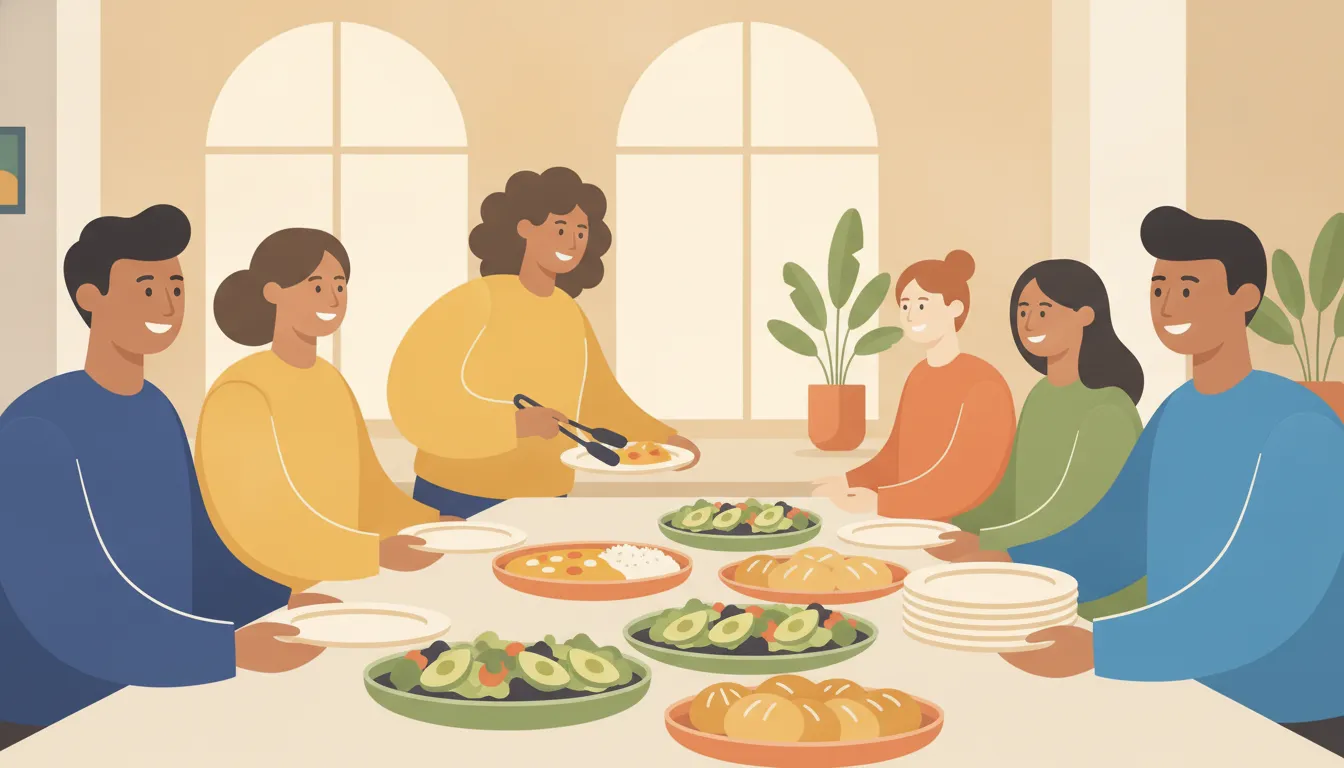
How Do You Calculate How Much Food to Order for an Office Lunch?
The basic office lunch formula is expected attendees x base portion per person. Use the number of people likely to eat, not the full calendar invite list. Choose a starting portion for a boxed meal, buffet, or shared spread. Then adjust for the schedule, menu, appetite, sides, beverages, and dietary alternatives. Spork Bytes uses these details to help Portland teams build a practical order.
This formula is a planning tool, not a universal serving guarantee. The same headcount can require different quantities when one group receives individual boxed meals and another chooses from a buffet. A filling entree with rice, pasta, potatoes, or beans should not be planned like a light sandwich and salad spread.
- Set the expected headcount. Count people likely to eat. Separate confirmed attendees from optional invitees, visitors, contractors, and people working another shift. If a 50-person meeting usually attracts 42 diners, record that assumption and revisit it when attendance changes.
- Choose the meal format. Individual meals are usually counted one per expected guest. Buffets, family-style meals, sandwich spreads, and salad menus require a shared estimate across mains and sides.
- Adjust for the meeting clock. A short lunch after breakfast differs from the only substantial meal during a long training. Consider how long the group will be onsite and whether guests can return for more food.
- Count sides and beverages separately. List fruit, salad, chips, dessert, water, coffee, tea, and other drinks as separate planning lines. Check whether a side is already included in a boxed meal.
- Reserve dietary portions. Count vegetarian, vegan, gluten-free, dairy-free, and other requested meals as dedicated portions. Do not expect someone with a restriction to build a complete meal from leftover sides.
- Review the whole plan. Compare the headcount, menu mix, schedule, venue, service style, and labels before finalizing the order. Recalculate when one of those conditions changes.
After the event, note what was popular, what remained, and whether attendance differed from the estimate. That record can make the next order more accurate without turning an estimate into a promise.
Start With Headcount, Schedule, and Appetite
The number of employees in an organization is rarely the right number for one lunch. Use the people who will actually have access to the meal. A required training may draw more diners than an optional drop-in lunch. A hybrid team may also have a different pattern from a department that works onsite every day.
Use a realistic attendance assumption
Begin with confirmed responses when available. If the event does not use RSVPs, review recent attendance for a similar meeting and document the basis for the estimate. Add visitors, presenters, or contractors who may not appear in the employee count.
Avoid treating a large buffer as the answer to every uncertainty. Improve the headcount first, then adjust the menu for the event conditions. This is especially useful for recurring Portland office lunches.
Read the meeting schedule
Timing influences appetite and service. A 30-minute working lunch favors food that is easy to pick up and eat. A longer break gives guests more time to choose among sides, return for seconds, and ask about ingredients. An all-day training may need more variety than lunch served after a substantial breakfast.
Account for appetite mix without guessing at individuals
You do not need to predict every person's appetite. Note the overall context instead. A late lunch, active workday, or long meeting can support a more generous starting estimate. A short midday meeting with a complete meal may call for a more contained plan. Keep the adjustment reasonable and label it as an assumption.
For help turning headcount, timing, and menu details into an order, review Spork Bytes' office catering ordering guide.
How Much Food to Order for an Office Lunch When the Menu Changes
Meal format changes what one portion means. For a boxed lunch, start with one complete meal per expected guest and record the selected options. For a buffet or shared spread, divide demand across mains and sides. A lighter menu may need more substantial accompaniments, while a filling entree may make extra side trays unnecessary. Spork Bytes can help match the menu to the meeting.
Count the components separately, then check that they work together. This prevents ordering a large quantity of one item while leaving a gap in another. It also prevents counting a side twice when it is already included in a meal package.
Boxed lunches and individual meals
Boxed meals are relatively simple to count because each expected diner receives a defined meal. Start with one entree per person, then confirm the side, dessert, and beverage included in each box. Record vegetarian, vegan, gluten-free, and other alternatives separately so the right meals are reserved and labeled.
Individual meals work well for trainings, timed meetings, and groups that need to return to work quickly. The important check is that each box is complete. If it includes fruit or chips, do not count those items again as a shared side unless you intentionally want an additional portion.
Buffets, family-style meals, and shared spreads
Shared meals need flexibility because guests choose different combinations. If there are two entrees, estimate how the group may divide between them, but do not assume the split will be exact. Provide enough of each option to make the choice meaningful, especially when one entree is the primary vegetarian or vegan option.
For sandwich and salad spreads, decide whether each item is a main or a side before ordering. A salad that functions as a full entree should not be counted like a small accompaniment. Write the menu as main, side, dessert, and beverage categories, and count each category once.
Warm entrees and filling menus
Warm entrees served with rice, pasta, potatoes, beans, or another substantial accompaniment can fill a different role from a light sandwich or salad. Review the total plate rather than looking only at the number of trays. Add another side for variety or dietary coverage, not simply because a generic chart suggests one.
To compare buffet, boxed, and other service approaches, review the office catering styles available for your event. Service style affects portion control, labeling, setup, and how quickly a group can eat.

How Many Sides, Desserts, and Beverages Should You Order?
Plan sides, desserts, and beverages as separate parts of the order. Start with the menu format and expected diners, then adjust for how filling the main meal is, how long the event lasts, and what the venue can store. Weather and agenda also matter. These quantities are planning starting points, not guarantees, and Spork Bytes can help coordinate the details.
Choose sides that add variety
For an individual boxed meal, check whether a side is already included. For a buffet or shared spread, choose complementary sides rather than several versions of the same item. Fruit plus a savory option can create variety, while a substantial entree may make an additional starch unnecessary. Count a composed salad or vegetable dish in the overall menu before adding another similar tray.
Dessert depends on the role of the meal. For a standard lunch, one small dessert portion per expected guest can be a starting point. A mix of fruit and a baked item may suit different preferences. If dessert is also planned for an afternoon break, count that occasion separately.
Match beverages to the agenda
Make water available to everyone and consider the time people will spend onsite. Coffee or tea may be useful for an early meeting, training, or long afternoon session. Confirm whether the venue has refrigeration, cups, ice, and a way to collect waste.
There is no single beverage ratio for every office lunch. A 30-minute meal, half-day workshop, and all-day event have different needs. Warm Portland weather may increase demand for chilled water, while a cold morning may make coffee or tea more relevant.
When you need help coordinating menus, drinks, setup, and cleanup, review Spork Bytes full-service office catering.
Get a Portland office lunch plan built around your event
How Do You Build Dietary Alternatives Into the Order?
Dietary alternatives belong in the first quantity estimate. Collect requests privately, count complete alternatives separately, label them clearly, and ask the food provider about ingredients and cross-contact. Do not promise that a meal is allergen-free unless the provider has confirmed the relevant preparation standard and limitations. Spork Bytes helps Portland teams keep these needs in the order from the beginning.
Give attendees a clear way to share dietary needs. Ask whether a request is a preference, ingredient avoidance, or allergy-related concern while protecting private information. Set a response deadline that leaves time to confirm the menu and source dedicated portions.
Count complete alternatives
Count each required meal as a complete portion rather than as an extra side. A person who needs a vegetarian or vegan option should have an entree and appropriate accompaniments. Someone with a gluten-related request may need a separately confirmed meal rather than a plate assembled from unverified shared dishes.
Ask preparation questions early
For allergy-related requests, ask which ingredients are present, how the food is prepared, and whether shared equipment or surfaces are involved. Ask what the provider can and cannot confirm. If the answer is uncertain, communicate that limitation so the attendee can make an informed decision.
Spork Bytes coordinates dietary accommodations, labeling, delivery, setup, and cleanup with local Portland food partners. The local restaurant network provides variety while the planning process keeps dietary needs in the count.
Office Lunch Quantity Examples for 20, 50, and 100 People
The table below provides practical starting points for a Portland office lunch where lunch is the main meal and the menu includes one substantial main. Shared sides, dessert, and nonalcoholic beverages are listed separately. These are planning estimates, not universal serving guarantees. Adjust them when the meal is boxed, the menu is light, breakfast or snacks are also available, or attendance is uncertain.
| Expected guests | Main meal | Shared sides | Dessert | Beverages | Assumption |
|---|---|---|---|---|---|
| 20 | 20 portions. Add 1 to 2 if needed. | 2 to 3 trays. | 20 to 24 pieces. | 30 to 40 drinks. | One-hour lunch. |
| 50 | 50 portions. Add 3 to 5 if needed. | 5 to 7 trays. | 50 to 60 pieces. | 75 to 100 drinks. | Buffet or individual meals. |
| 100 | 100 portions. Add 5 to 10 if needed. | 10 to 14 trays. | 100 to 120 pieces. | 150 to 200 drinks. | Full-group or staggered service. |
Adjust the ranges to the event
Use the lower end when attendance is firmly confirmed, the meal is short, or food is served alongside another substantial meal. Move toward the higher end when lunch is late, the meeting is long, the menu has lighter mains, or guests have extended access to the spread. For boxed lunches, count one complete meal per expected guest and verify every box's contents.
For a buffet, consider how dishes work together. A filling entree with substantial sides may need fewer additional trays than a sandwich spread with lighter accompaniments. Keep dietary alternatives in the main count and reserve clearly labeled portions for the people who reported them.
Get a tailored Portland office lunch plan from Spork Bytes
Frequently Asked Questions
How do I order lunch for the office?
Start with expected diners, meal format, schedule, appetite context, sides, beverages, and dietary needs. Write down the assumptions behind the estimate, then confirm the menu and service details with the catering partner. For larger Portland workplace meals, professional coordination can keep ordering, delivery, setup, labeling, and cleanup in one plan.
How much food do I need for 20 guests?
For 20 guests, start with 20 complete main portions. If attendance is uncertain or lunch is the only substantial meal during a long meeting, consider a modest adjustment of 1 to 2 additional main portions. Add sides, dessert, drinks, and dietary alternatives separately based on the menu and schedule.
Should dietary alternatives be included in the quantity calculation?
Yes. Count each reported dietary need as a complete, dedicated portion rather than assuming a guest can use a shared side. Confirm ingredients, preparation, labeling, and cross-contact limitations early. This produces a more useful count and gives the provider time to coordinate an appropriate alternative.
How should I plan sides and beverages?
List sides and beverages separately from the main meal. Check what is already included in a boxed meal, then adjust shared options for the menu, meeting length, weather, venue storage, and time guests spend onsite. Provide enough variety to make the meal practical without duplicating included items.
Request help with your next Portland office lunch.
Plan Your Portland Office Lunch With Confidence
The best answer to how much food to order for an office lunch is a documented estimate. Build it around the actual event. Begin with expected attendees, choose the meal format, adjust for timing and appetite, count sides and beverages separately, and reserve complete dietary alternatives. Review the plan again when the guest list or schedule changes.
Spork Bytes helps Portland companies coordinate workplace meals through local restaurant partners, with support for menu planning, delivery, setup, labeling, and cleanup. Use the Spork Bytes contact page to discuss the event or choose the Get Started form when you are ready to plan a tailored order.
See more of our blog

Hybrid Work Meal Planning: A Portland Office Guide
Plan office meals around changing attendance with flexible formats, clear headcounts, and practical ordering steps for Portland hybrid teams.

Office Meal Calendars: How to Plan a Better Recurring Lunch Program
Build an office meal calendar around attendance, team preferences, and a practical cuisine rotation. Use this Portland guide to plan a repeatable lunc...

Planning an office catering service agreement in Portland? Use this practical checklist to clarify scope, timing, changes, communication, and billing.
An office catering service agreement should make it easier for your team and catering provider to understand what will happen, when it will happen, an...