Office Catering Timeline for a Portland Workplace Meal
Office meals rarely become stressful because of the menu alone. The pressure usually comes from small decisions landing at the same time: attendance changes, dietary needs, delivery access, room setup, and unclear ownership.
An office catering timeline starts about two weeks before a larger or more involved workplace meal. It works backward from serving time through menu planning, dietary coordination, headcount confirmation, delivery access, room setup, event-day support, cleanup, and follow-up. Smaller orders may need less time, while larger groups, staffed service, complex menus, and busy dates may need more.
Talk with Spork Bytes about your office catering plan
For a Portland workplace, the best schedule gives every decision an owner and a realistic deadline. That lets the organizer focus on the employee experience instead of chasing missing information on event day. Use the framework below as a planning guide, then adjust it for your headcount, service format, location, and date.
How to Build an Office Catering Timeline for a Portland Event
An effective office catering timeline works backward from the time the meal should be ready. It assigns owners to the menu, dietary information, headcount, building access, setup, communications, and follow-up. Start earlier for larger groups, staffed service, multiple dietary requirements, or a date when availability may be limited.
Begin with the meal experience rather than an order form. Write down when food needs to be ready for employees, not only when a delivery is expected. A noon lunch may require setup before the first guest arrives, plus time for an elevator reservation, loading instructions, or a delivery entrance to be confirmed.
Set the serving time and work backward
Create a milestone list that begins with the serving time. Add the room-ready time, delivery arrival window, building-access deadline, final order confirmation, dietary response deadline, menu decision, and initial event brief. Each milestone should have one person responsible for moving it forward.
The operational owner can manage attendance, access, room layout, and vendor questions. A final approver can make decisions about menu, service format, and budget when tradeoffs appear. If facilities, HR, finance, or an executive host has a separate requirement, include that person before the order becomes complicated.
Match the planning window to event complexity
There is no universal lead time for every office meal. A small, straightforward order may be possible with a shorter window. Larger groups, hot buffets, staffed service, multiple dietary requests, holiday dates, and difficult building access all justify starting earlier. Treat any lead-time estimate as a planning reference, not a promise of availability.
Spork Bytes connects Portland companies with local restaurants and coordinates workplace logistics around the meal. Review the office catering services before setting expectations with your team.
10 to 12 Business Days Before: Lock the Event Basics
Ten to twelve business days before the meal, confirm the date, serving time, Portland location, expected attendance range, service format, budget owner, and room constraints. These basics shape the menu, staffing, delivery route, setup plan, and communications that follow.
Start with the decisions that affect every later choice. Confirm the event date, meal period, serving time, and location before comparing menus. Breakfast at 8:00 a.m. creates different access and setup needs from lunch at noon. A downtown office may also require different arrival instructions from a suburban workplace.
Define the experience and the room
Choose the broad format: individually packaged meals, shared platters, a drop-off spread, or a staffed buffet. Each option changes table space, serving flow, equipment, timing, and cleanup. Walk through the room where food will be received and served. Identify the entrance, loading area, elevator access, parking restrictions, available tables, power needs, and path from delivery point to meal area.
| Format. | Plan for. | Useful when. |
|---|---|---|
| Individually packaged. | Names, labels, and distribution space. | People eat on different schedules. |
| Shared platters. | Serving utensils, table space, and clear flow. | The group wants flexible portions. |
| Staffed buffet. | Staff access, queue space, and service timing. | The meal needs guided service. |
Record the practical guardrails. Note the approved spending limit and what it includes, such as delivery, setup, service, equipment, and cleanup. A useful budget brief includes the expected headcount, service format, dietary requirements, and building constraints. It does not need to promise a price before the scope is clear.
Assign decisions before the order gets complicated
Name one operational owner and one final approver. The operational owner can answer questions about access, attendance, room layout, and internal communications. The approver can make the call on menu, format, and budget. This simple structure prevents a group chat from becoming the only place where important decisions are recorded.
By the end of this checkpoint, the brief should answer five questions:
- When: What is the serving time and event date?
- Where: What entrance, floor, room, and loading instructions apply?
- Who: What is the expected attendance range and who owns the list?
- What: What meal format and workplace experience are needed?
- Who approves: Who can make the final menu and budget decision?

7 Business Days Before: Build the Menu and Dietary Plan
About seven business days before the meal, turn the attendance estimate into a menu and dietary plan. Collect dietary information privately, review the complete spread with the coordinator, plan clear labels, and set a firm response deadline before the final order is confirmed.
With the event basics in place, use this stage of the office catering timeline to choose food that fits the meeting. A buffet offers variety and flexible portions. Individually packaged meals can simplify distribution when employees move between rooms or eat on different schedules. For a presentation or training session, favor food that is easy to serve and does not require complicated table management.
Collect dietary needs with care
Collect dietary needs privately through a direct response or simple form. Ask for the information needed to coordinate the meal, such as vegetarian, vegan, gluten-free, dairy-free, or allergy-related requirements. Do not ask employees to announce personal restrictions in a group thread, and do not treat every preference as interchangeable with an allergy.
Share a consolidated list with the catering coordinator so the menu, portions, ingredients, and labeling can be reviewed before the order is finalized. Multiple dietary requests can add planning work, especially when the menu has several components. Communicate them as soon as possible rather than leaving them to the final confirmation.
Build labels and substantial alternatives
Decide how dishes will be identified, where dietary-specific meals will be placed, and who can answer ingredient questions during service. Labels should use plain descriptions instead of vague terms such as special. Keep alternatives visible without singling out the employees who requested them. A clearly marked plant-based entree or gluten-free option should be a complete meal, not an afterthought.
Review the menu as a complete spread. Check variety, portioning, serving utensils, and the way dishes will fit the room. Spork Bytes coordinates dietary details with restaurant partners, so the organizer can manage these decisions through one planning relationship.
Set the headcount deadline
Give employees a firm response deadline and explain what to submit, where to submit it, and what happens if the deadline is missed. Keep a working range while responses arrive. When the response window closes, send the updated count and dietary information through one agreed channel.
For Portland teams comparing cuisines and service styles, review the Portland restaurant options before choosing the final mix. Choosing the food now gives the next stage time to confirm ordering, delivery access, setup, and billing.
3 to 5 Business Days Before: Confirm Ordering, Delivery, and Setup
Three to five business days before the event, turn the plan into one operating brief. Confirm the menu, quantities, dietary requests, labels, delivery window, building access, onsite contacts, room setup, supplies, and billing details. Send changes promptly so the team can respond before event day.
Review the menu, quantities, serving format, dietary requests, labels, and approved substitutions. If the headcount has shifted, share the update promptly. Confirm the delivery window as a window, not a guaranteed arrival minute, and make sure the person receiving the order knows when to expect the handoff.
Give the delivery team usable access details
- Location: Building address, entrance, suite, and floor.
- Arrival: Loading instructions, parking limits, and security procedures.
- Movement: Elevator access, stairs, badges, or a required call on arrival.
- Contacts: A named onsite contact and a backup contact.
- Room: The setup surface, serving area, waste location, and any restrictions.
Spork Bytes coordinates ordering and delivery with the office, so these details belong in the final confirmation rather than a last-minute text thread. A single support contact can also help keep updates consistent when multiple restaurant items are part of one meal.
Prepare the room and billing details
Choose the setup surface and walk through the room flow. A sturdy table near the serving area can keep the line moving. A separate location for drinks, utensils, and waste can prevent congestion. Note narrow doorways, limited counter space, shared equipment, or another event nearby.
Confirm plates, napkins, cups, cutlery, condiments, serving utensils, and waste bags. Make sure labels will be visible and dietary items can remain clearly separated. Confirm the company name, invoice recipient, purchase order requirements, and deadline for payment information.
Share your date, headcount, and setup needs with Spork Bytes.
1 to 2 Business Days Before: Finalize Timeline Details
One to two business days before the meal, verify the final headcount, menu, dietary list, labels, access instructions, delivery contacts, and change cutoff. Assign one person to communicate with the caterer and one channel for attendee updates. The goal is a clear response plan, not a promise that every late request can be added.
Recheck the attendee count with the person who owns registration or invitations. Confirm whether the number includes organizers, guests, presenters, and employees who may arrive after the meal begins. Share the final count through one agreed channel so the latest version is easy to identify.
Confirm what can still change
Ask what changes remain operationally possible and when the cutoff occurs. A late addition may affect portions, packaging, dietary accommodations, staffing, or delivery logistics. Do not promise attendees that every request can be added. Tell them the team is checking availability and will communicate the answer once confirmed.
Review the menu against the final dietary list. Keep personal health information private and share only the details needed to coordinate the meal. Confirm that special meals will be clearly labeled and that attendees will know where to find them.
Prepare a practical communication plan
Reconfirm the building entrance, loading area, parking instructions, elevator requirements, reception procedure, and backup contact. If construction, a security change, a building closure, or weather could affect access, communicate it as soon as you know. Portland rain or winter conditions may change arrival and unloading even when the office remains open.
Agree on who will communicate with the catering team, who will update facilities or reception, and who will notify attendees. A simple message can set expectations without creating alarm: the team is monitoring the situation. The meal plan is being coordinated, and meaningful changes will be shared through the normal event channel.
For a deeper reference, see the office catering contingency plan. This article is a chronological planning framework. The contingency guide can support a separate response plan when access, timing, or availability changes.
Event Day: Deliver, Set Up, and Support the Meal
On event day, the onsite owner should meet the delivery team, confirm the order, prepare the room for a clear flow, and keep dietary labels visible. During service, monitor the spread, answer questions from confirmed information, and escalate discrepancies instead of guessing.
Event day should feel orderly because the decisions were made earlier. Assign one onsite point person to meet the delivery team, confirm the order against the final plan, and communicate any changed access details. A quick arrival check can prevent an unavailable loading area or occupied conference room from disrupting the meal.
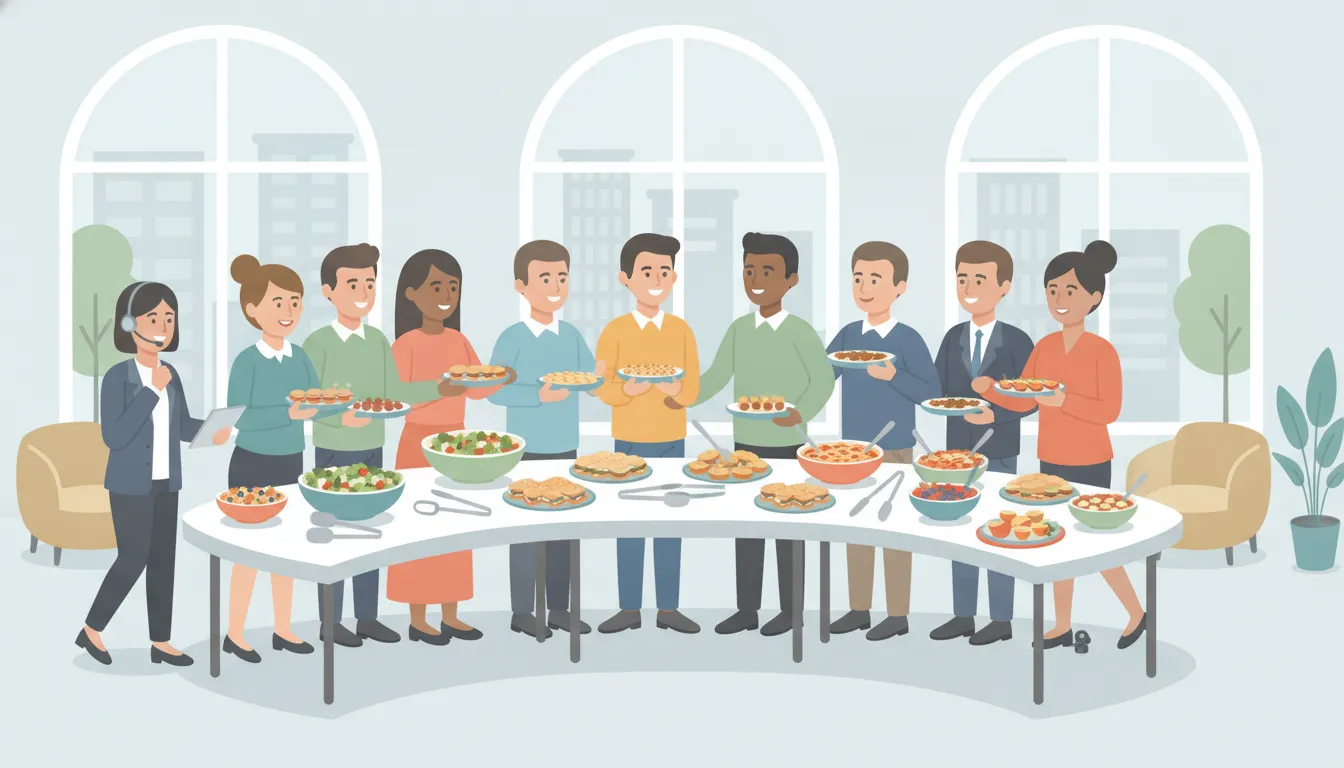
Before guests serve themselves, set the room for a clear flow. Place food on a stable surface with enough space for people to move without crowding. Group dishes logically, keep serving utensils with the correct items, and place beverages and napkins where they will not create a bottleneck. Labels should sit directly with each dish.
During the meal, stay close enough to notice what needs attention. Straighten the serving area, replenish items when appropriate, and answer ingredient questions using the confirmed menu information. If a dish is missing, mislabeled, or different from what was confirmed, pause and verify rather than guessing.
Keep food safety in the service plan
Food safety is a shared responsibility. Follow the caterer's handling instructions and keep the serving area clean. Perishable food should not remain at room temperature for more than two hours, according to Mayo Clinic food-safety guidance. Decide before service who will monitor the buffet and how leftovers will be handled.
The Next Business Day: Close the Loop on the Next Meal
The next business day, close the loop by confirming cleanup, returning equipment, recording attendance and menu feedback, and noting any delivery or dietary lessons. Save useful preferences for the next order while the details are still fresh. A short review turns one successful meal into a better repeatable process.
After the meal, cleanup is more than removing empty trays. Clear serving surfaces, collect reusable equipment or packaging as arranged, consolidate leftovers safely, and return the room to its agreed condition. Confirm that nothing was left in a break room, conference room, loading area, or shared refrigerator.
Record what should carry forward
Write down the actual attendance, popular dishes, dietary requests, room constraints, delivery notes, and changes that came in late. Separate useful observations from personal health information. The next organizer should have practical guidance without receiving unnecessary private details.
Ask attendees for focused feedback about menu variety, portioning, timing, labels, and room flow. If you use Spork Bytes for future meals, saved preferences and a continuing relationship can make reordering easier. The get started page is a useful next step for teams building a recurring workplace meal plan.
Office Catering Timeline Checklist for Portland Teams
Use this condensed office catering timeline when you need a quick review: set the event basics 10 to 12 business days ahead. Build the menu about seven business days ahead, confirm logistics three to five days ahead, finalize details one to two days ahead, then assign event-day and follow-up owners.
Keep the checklist with the event brief so the whole team can see the current plan.
- 10 to 12 business days before: Confirm date, meal time, location, attendance range, format, room, budget owner, and operational owner.
- 7 business days before: Choose the menu, collect dietary information privately, plan labels, and set the headcount deadline.
- 3 to 5 business days before: Confirm quantities, delivery window, access instructions, contacts, setup supplies, billing, and service details.
- 1 to 2 business days before: Verify final headcount, menu, labels, access, change cutoff, contingency communication, and attendee instructions.
- Event day: Meet delivery, check the order, set the room, keep the flow clear, and monitor the meal.
- Next business day: Complete cleanup, record feedback, return equipment, and save useful preferences for the next order.
The schedule is a tool, not a rigid promise. Move milestones earlier when the event includes several restaurants, staffed service, complex dietary coordination, a large attendance range, or a difficult building. Teams that need more support can compare the full-service office catering options and choose the level of coordination that fits the event.
Frequently Asked Questions About an Office Catering Timeline
How far in advance should an office meal be planned?
Start about two weeks ahead for a larger or more involved office meal. Smaller, straightforward orders may need less time, while larger groups, staffed service, multiple dietary requests, holiday dates, and difficult access may require more. Confirm availability before communicating a firm schedule.
When should dietary information be collected?
Collect dietary information as soon as the event basics are set, ideally at least a week before the meal. Use a private response process, share only the details needed for coordination, and confirm labels and substantial alternatives before finalizing the order.
What should be confirmed before office catering delivery?
Confirm the final headcount, menu, dietary requirements, labels, delivery window, building entrance, loading and parking instructions, elevator or security requirements, onsite contacts, setup surface, supplies, and billing details. Put the information in one operating brief so the delivery team and office owner are working from the same plan.
What should happen after the catered office meal?
Confirm cleanup, return equipment as arranged, record useful menu and logistics feedback, and note what should change next time. Keep practical preferences for future planning, but separate them from unnecessary personal health information.
<!-- FAQ schema is configured in the publishing implementation scope. -->See more of our blog

Hybrid Work Meal Planning: A Portland Office Guide
Plan office meals around changing attendance with flexible formats, clear headcounts, and practical ordering steps for Portland hybrid teams.

Office Meal Calendars: How to Plan a Better Recurring Lunch Program
Build an office meal calendar around attendance, team preferences, and a practical cuisine rotation. Use this Portland guide to plan a repeatable lunc...

Planning an office catering service agreement in Portland? Use this practical checklist to clarify scope, timing, changes, communication, and billing.
An office catering service agreement should make it easier for your team and catering provider to understand what will happen, when it will happen, an...