Picnic Menu Ideas for Large Groups: Portland Office Catering
Picnic Menu Ideas for Large Groups: A Practical Portland Catering Guide
A Portland office picnic can feel wonderfully simple until someone has to coordinate enough food for a full team. Keep every meal identifiable, and make sure lunch still works when the weather changes. The menu needs to travel well, serve different appetites, and arrive ready for an outdoor setting without creating a second full-time job for the organizer.
Contact Spork Bytes to start planning your office picnic.
The most practical picnic menu ideas for large groups combine portable entrees, easy-to-serve sides, clearly labeled dietary options, and a dependable plan for delivery and timing. A catering partner can coordinate family-style portions or boxed meals with local Portland restaurants. Start early, confirm dietary needs, and choose a serving format that fits your venue.
Once the food itself is matched to the setting, the next challenge is managing quantities, presentation, and handoffs for a group that may include dozens of people. That operational side is where thoughtful catering support makes an outdoor office meal easier to run.
Why Office Picnic Menu Ideas for Large Groups Need a Catering Partner
Planning an outdoor office meal in Portland involves more than choosing appealing food. Someone must collect preferences, confirm quantities, coordinate with restaurants, schedule delivery, organize the serving area, and keep the event moving when plans change. For a small gathering, one person may be able to manage those details. For a team of 15 to 100 or more, the menu is only one part of the operation.
That is where a catering partner adds value. Spork Bytes is not a restaurant. It is a logistics, coordination, and ordering partner that connects companies with local Portland restaurants. Instead of leaving an office manager to manage several vendors and a long chain of details, Spork Bytes brings the ordering and event logistics into one coordinated process.
That distinction matters when comparing picnic menu ideas for large groups. A good menu must fit the setting, but it also needs a practical serving format. Individually boxed meals can make distribution easier and give each person a clearly identified order. Family-style portions can create a more communal meal and work well when the group is comfortable serving itself. Both formats can be coordinated through pre-approved local restaurant partners, so the choice can reflect the event rather than forcing the event to fit one service model.
Scale also changes the planning timeline. Spork Bytes typically supports groups of 15 to 100 or more people, with an average group of around 55. Typical lead time is two to five business days, although the right timing depends on the menu, group size, restaurant availability, and event details. Starting early gives the team more room to confirm dietary needs, select a format, and address practical questions about the site.
The operational handoff can include ordering, restaurant coordination, delivery, setup, labeling, and billing. That means the office manager is not left tracking whether each part has been completed while also preparing the picnic space and welcoming employees. A partner can help align the meal with the arrival time, layout, and service plan, making the experience easier for attendees and the internal planning team.
Working with a Portland-focused partner also supports local restaurants while giving workplace teams access to variety without creating a separate coordination project for every vendor. For a closer look at the process, explore catering logistics for large groups in Portland.
What Belongs on a Large-Group Picnic Menu That Travels Well?
Build a large-group picnic menu around portable entrees and sturdy sides, use clear dietary labels, and choose a practical serving format so the food arrives appetizing and easy to distribute outdoors. Favor foods that travel and hold well, and confirm quantities with a trusted headcount before finalizing.
The best menu is easy to carry, easy to identify, and easy to eat without creating a long line at one picnic table. For a Portland office gathering of 15 to 100 or more people, build around foods that stay appealing during transport and can be served promptly. Choose items that are stable at room temperature or can be maintained safely at cold or hot temperatures throughout the event. Oregon State University Extension notes that the temperature danger zone is 40 degrees F to 140 degrees F, so portability should support safe handling as well as convenience.
Start with a mix of familiar office favorites and a few distinctive local options. That balance gives cautious eaters a dependable choice while making the meal feel more thoughtful than a standard boxed lunch. A practical menu might include:
- Cold salads and pasta salad: Choose substantial salads with dressings that hold up well, such as pasta, grain, bean, or sturdy vegetable salads. Keep chilled ingredients properly cold until service.
- Portable sandwiches and wraps: These are natural grab-and-go choices for staggered breaks. Offer several fillings, with clear labels for vegetarian, vegan, gluten-free, and allergy-aware selections.
- Grilled or barbecue proteins: Chicken, pulled pork, skewers, or other grilled choices can anchor the meal when they arrive hot and are served on schedule. Include a satisfying non-meat option rather than treating it as an afterthought.
- Sturdy side dishes: Roasted vegetables, slaws, baked beans, rolls, and similar sides are easier to portion and transport than delicate preparations. Select sides that remain attractive during setup.
- Fresh fruit: Whole fruit or prepared portions add a lighter option. Keep cut fruit protected and chilled, particularly on warm Portland afternoons.
- Handheld desserts: Cookies, bars, brownies, and individually portioned treats are simple to distribute without extra plates or utensils.
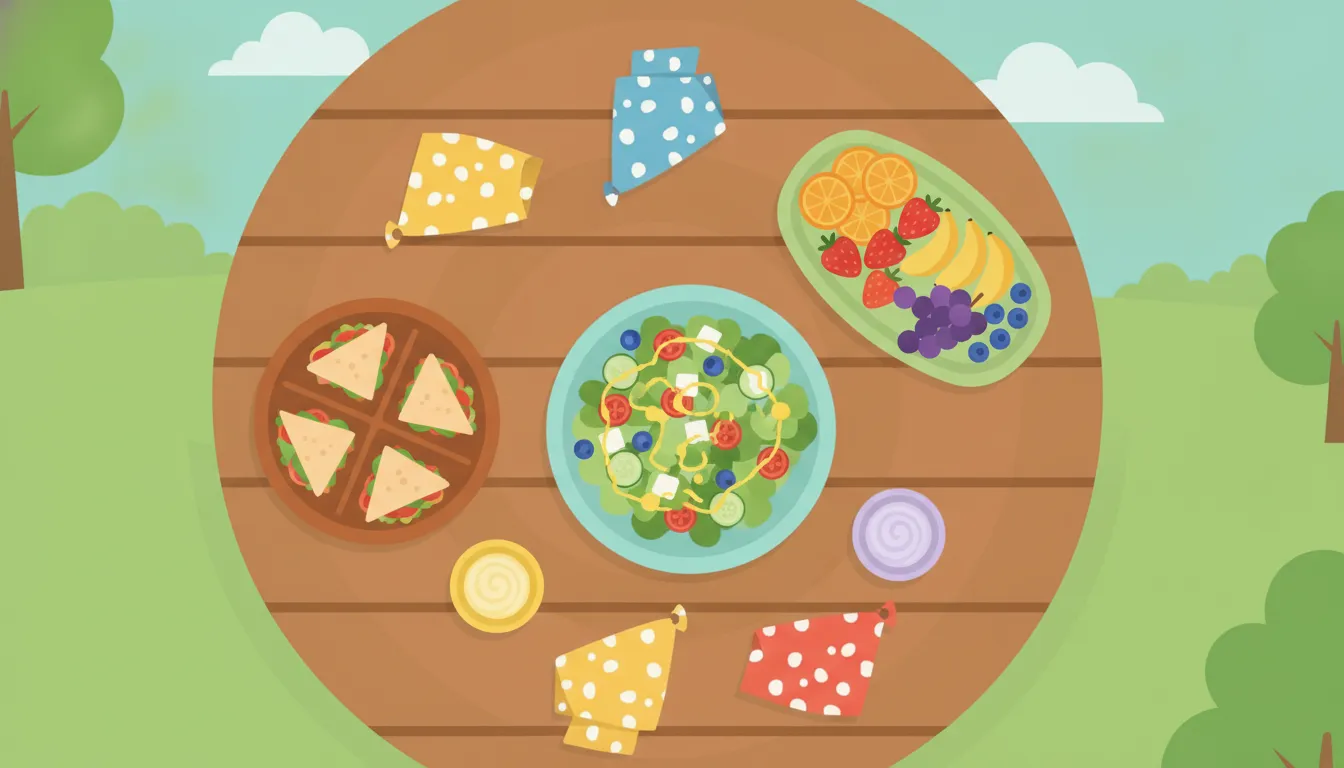
For a larger picnic, individually boxed meals make the menu easier to grab and go. Labeled boxes also reduce confusion when attendees have different dietary needs, while family-style trays can work well for shared favorites and relaxed seating. Before finalizing quantities, review how much food per person so portions match the group and the event format. The result should feel abundant and welcoming without asking an office manager to coordinate every serving detail on site.
Cold vs. Hot Picnic Foods: What Works Outdoors in Portland
Portland's mild summer days make an outdoor office picnic appealing, but a comfortable setting does not remove the need for careful temperature planning. The most practical menu usually combines cold and room-temperature items with a smaller selection of hot dishes. That mix keeps food easy to carry and serve while still giving the meal enough variety to feel complete.
For a large outdoor picnic. Weight the menu toward portable cold and room-temperature foods and add hot items only when they can be delivered and held at a safe temperature. Favor dishes that stay appealing during transport and keep the serving plan simple for the organizer.
The key safety issue is the temperature danger zone. According to Oregon State University Extension, bacteria can grow rapidly between 40 degrees F and 140 degrees F. Cold foods should stay at 40 degrees F or below, while hot foods need reliable heat holding. Food should not remain outside for more than two hours, so the service plan matters as much as the menu.
Why cold and room-temperature foods work well
Cold foods are often the best foundation for grab-and-go service. Grain salads, pasta salads, wraps, sandwiches, cut vegetables, fruit, and chilled desserts can be portioned in advance and served without creating a long line around one buffet pan. Items that are naturally stable at room temperature, such as breads and some whole fruit, work well. While individually packaged snacks add flexibility but should still be protected from direct sun and monitored during the event.
Transport is part of the recipe. Use insulated containers, cold packs, shaded staging areas, and smaller serving batches rather than placing the entire order out at once, and follow a catering setup checklist for the site. Keep chilled dishes covered until service, and replenish them as guests eat. This approach is especially useful when attendees arrive in waves from nearby Portland offices or when the picnic schedule includes activities between meal periods.
When hot food earns a place on the menu
Hot dishes can bring comfort and variety to an outdoor meal, including roasted vegetables, grilled proteins, or warm grain-based entrees. They require more coordination, however. The food should arrive close to service, remain in appropriate chafing dishes or other approved heat-holding equipment, and be checked throughout the meal. A hot item that cannot be held safely is better replaced with a well-chilled or room-temperature alternative.
A professional setup helps make that choice manageable. Spork Bytes can coordinate delivery timing, setup, and serving formats with local restaurant partners, so office managers do not have to improvise a hot-holding plan at the park. For picnic menu ideas for large groups, the strongest approach is not choosing cold or hot exclusively. Build the menu around portable foods, add hot dishes only when the venue supports them, and plan portions in waves to protect quality and safety.
Family-Style Buffet or Individually Boxed Meals for Your Picnic?
Choose family-style service for social, unhurried gatherings and individually boxed meals for larger or time-sensitive teams. Boxed meals make distribution faster, labeling clearer, and dietary needs easier to honor for groups approaching 55 or beyond, with less congestion at the food station.
The right service format depends less on the menu itself than on how your Portland team will move through the meal. Family-style service creates a relaxed, communal experience. Shared platters and serving dishes encourage people to gather, compare choices, and enjoy the feeling of a traditional picnic. It works especially well when the event is intentionally social and the site has enough table space for food, serving utensils, and clear traffic flow.
Individually boxed meals create a more predictable experience for larger or time-sensitive gatherings. Each order can be labeled, handed to the right person, and eaten without a long serving line. That simplicity is especially useful when attendees have different dietary needs or when the picnic schedule includes activities, presentations, or staggered breaks. Spork Bytes can coordinate either individually boxed meals or family-style portions with local Portland restaurant partners, along with delivery, setup, labeling, and billing.
| Format | Best for | Dietary labeling | Lines/setup | Cleanup | Best group size |
|---|---|---|---|---|---|
| Family-style buffet | Social, unhurried picnics where guests enjoy sharing and sampling | Possible, but labels must stay visible beside each dish and serving utensil | Requires more table space and can create congestion around popular dishes | More serving dishes, utensils, and food containers to gather | 15-60 people, or larger groups with ample space and planned stations |
| Individually boxed meals | Grab-and-go service, scheduled breaks, and teams with varied meal choices | Each box can be individually labeled for clearer identification | Faster distribution with less line congestion and a simpler setup | Less shared serving equipment, though boxes and packaging still need collection | 40-100+ people, especially when timing and flow matter |
For a smaller group of 15 to 40, family-style service can feel warm and effortless when the venue offers stable tables, shade, and room for people to circulate. It is also a good choice when the goal is shared discovery rather than quick distribution. For teams closer to 55 or extending beyond 100, individually boxed meals often make the day easier to manage. Individually labeled orders reduce uncertainty at the food station and help people find the meal selected for them without stopping to ask about every dish.
There is no need to choose one format for every part of the menu. A picnic can combine boxed main meals with shared fruit, desserts, or beverages, provided the setup keeps labels clear and the service plan matches the venue. When developing catering logistics for large groups, consider the number of attendees, available tables, dietary variety, meal timing, and who will handle cleanup. The best picnic menu ideas for large groups are the ones that let employees enjoy the event instead of managing the line.
Talk with Spork Bytes about catering for your team.
How to Plan Picnic Menu Ideas for Large Groups and Keep Food Safe Outdoors
Plan the menu around the headcount, portability, and temperature control, then confirm a weather backup before the event. Keep cold food at or below 40 degrees Fahrenheit, limit outdoor time, and rely on insulated holding and shaded service to protect the meal.
A successful outdoor office meal depends on more than choosing appealing dishes. Plan the menu around headcount, portability, temperature control, and a clear response if Portland weather changes. This sequence keeps the event practical for the organizer and comfortable for the people eating.
- Confirm the headcount and lead time. Establish a working guest count, venue details, serving time, and dietary requirements before selecting the menu, and confirm how much food per person for the event. For groups of 15 to 100 or more, Spork Bytes typically recommends allowing 2 to 5 business days for planning and coordination. Those ranges are not guarantees, so earlier notice gives local restaurant partners more room to prepare and helps avoid last-minute substitutions.
- Choose the service format before finalizing dishes. Decide whether family-style portions or individually boxed meals better fit the space, staffing, and pace of the picnic. Family-style service can create a welcoming shared meal, while boxed meals simplify distribution when attendees arrive at different times or seating is spread across a lawn. The format affects packaging, labeling, setup, and how quickly food can be served.
- Prioritize portable items and plan cold holding. Favor foods that travel well and remain appropriate at room temperature for the intended serving window. Or arrange equipment that keeps perishable cold items at 40 degrees Fahrenheit or below. Salads, sandwiches, and other chilled dishes should arrive in insulated transport and stay shaded whenever possible. Avoid relying on foods that require complicated on-site preparation. The CDC's Clean, Separate, Cook, and Chill framework is a useful foundation for reducing food-safety risks at group gatherings: follow the four steps to food safety.
- Control the clock and the temperature. The food-safety danger zone is 40 to 140 degrees Fahrenheit, where bacteria can grow rapidly. Keep hot and cold items in their appropriate holding conditions, set out smaller portions when practical, and do not leave perishable food outdoors for more than two hours. Oregon State University Extension also recommends keeping cold food at 40 degrees Fahrenheit or below and limiting outdoor time: review its summer food-safety guidance. Avoid higher-risk choices such as unwashed produce, cut melon, and unpasteurized products.
- Label servings and support clean hands. Clearly mark vegetarian, vegan, gluten-free, and allergy-sensitive options, using individually labeled meals when that makes distribution safer and easier. Keep serving utensils separated, provide hand-washing access or sanitizer, and remind guests to clean their hands before eating. The CDC advises washing with soap and water for at least 20 seconds before, during, and after food preparation and before eating.
- Build a weather and cancellation contingency. Decide in advance who monitors the forecast, when the final call is made, and whether the event moves indoors, changes timing, or needs a revised delivery plan. Share the backup location and decision deadline with the catering coordinator, venue contact, and attendees. A practical contingency protects food temperature, preserves the meal experience, and reduces rushed decisions if conditions shift.
With these decisions made early, the menu can support the picnic instead of becoming another operational problem for the organizing team.
How Do You Handle Dietary Needs in a Big Picnic Menu?
Collect dietary needs up front, separate preferences from allergies, and plan vegan, vegetarian, and gluten-free options as complete meals. Label each item clearly, confirm how the caterer keeps allergen-sensitive orders distinct, and keep labeled meals easy to find at service.
A successful Portland office picnic gives every team member a meal they can enjoy without having to investigate every tray or ask a colleague to interpret an ingredient list. Before choosing the menu, collect dietary needs in a consistent format and separate preferences from allergies. Vegan and vegetarian meals should be planned as complete options, not just side dishes. Gluten-free meals need more than removing the bread, since sauces, dressings, marinades, and shared serving utensils can also matter. Common allergies, including tree nut and dairy allergies, deserve clear attention during menu selection and setup.
For a large group, choose catering partners based on their ability to handle these requirements reliably. The goal is not to promise that every item is suitable for every person. It is to confirm what each meal contains, communicate that information accurately, and make the safe choice easy to find. Ask the caterer how they identify allergen-sensitive orders, whether meals are prepared separately when appropriate, and how those meals will be kept distinct during delivery and service.
Individual labeling is especially valuable when a picnic serves dozens of people. A label can identify the meal type, such as vegan or vegetarian, and call out relevant allergens such as dairy, gluten, or tree nuts. It also reduces confusion and line congestion because employees can select their meals without opening containers or waiting for an organizer to answer the same question repeatedly. For more planning guidance, review these catering menus for mixed dietary needs.
- Confirm vegan and vegetarian meals as full entrees with satisfying protein and sides.
- Mark gluten-free meals clearly and confirm sauces, dressings, and shared utensils.
- Identify tree nut and dairy concerns before finalizing the menu and service plan.
- Place labeled meals together in an easy-to-find area, while keeping them separate from general buffet items when needed.
Spork Bytes helps Portland office teams coordinate menus with local restaurant partners, including ordering, labeling, delivery, and setup. That operational support lets the event organizer focus on welcoming the team instead of managing dietary questions at the picnic table.
What Does a Catered Office Picnic in Portland Actually Include?
A catered office picnic covers ordering, restaurant coordination, delivery, setup, labeling, and billing rather than just the food. A partner aligns arrival timing, serving format, and site details so the meal feels effortless for employees and keeps the event on schedule.
A catered office picnic should cover more than the food itself. For a Portland team, the right partner coordinates the moving parts so the event feels relaxed for employees and manageable for the person organizing it. That support can begin with choosing a format that fits the venue, schedule, and group, then continue through the final cleanup.
Spork Bytes connects companies with more than 70 local Portland restaurants and manages the ordering conversation with the selected restaurant partner. That gives office managers access to variety without requiring them to compare menus, collect individual requests, and coordinate several vendors themselves. It also keeps the event connected to the local food economy. Learn more about supporting local Portland restaurants through workplace meals.
Once the menu and headcount are confirmed, the logistics partner coordinates preparation and delivery to the picnic location. Meals may arrive as family-style portions for a shared spread or as individually boxed meals for a quicker, more orderly service. Boxed meals can be labeled with names or dietary details, helping attendees find the right option without creating a crowded serving line. Clear labeling is especially useful when a group includes vegan, gluten-free, or allergy-related needs.
The planning conversation can also account for practical details that are easy to overlook outdoors. The partner can confirm the delivery entrance, identify where food should be placed, align arrival with the event schedule, and clarify who will receive the order. Those details matter when a picnic takes place away from the office, especially in a park or shared outdoor space.
Delivery is only one part of the setup. Depending on the outdoor venue and event plan, support may include arranging tables, chafing equipment, serving supplies, or other practical equipment for keeping the meal organized. A useful catering setup checklist can help confirm access points, serving surfaces, shade, waste bins, and the timing for food placement before the event begins.
The final step is closing the loop. A full-service partner can help coordinate labeling, billing, and environmental cleanup so the office manager is not left sorting receipts or gathering serving materials after the picnic. The result is a simpler handoff from planning to delivery to departure that still gives Portland employees a welcoming meal and gives local restaurant partners a meaningful role in the event.
Contact Spork Bytes to plan your large-group picnic menu in Portland.
Frequently Asked Questions
What are good picnic menu ideas for large groups?
Build around foods that are easy to serve outdoors, such as sandwiches or wraps, composed salads, portable sides, fresh fruit, and individually portioned desserts. Offer a mix of familiar choices and local Portland flavors, then add clearly labeled vegan, gluten-free, and allergy-aware options so guests can choose confidently.
How much food should I order per person for an office picnic?
Start with the confirmed guest count, then plan portions across the full menu rather than ordering equal amounts of every item. Account for the event length, whether food is the main meal, the balance of entrees and sides, and the number of dietary-specific meals. For groups of 15 to 100 or more, a catering partner can help coordinate quantities and formats for the venue.
How do you keep catered picnic food safe outdoors in the summer?
Keep cold foods at 40 degrees Fahrenheit or below, and limit how long perishable food remains out. Use shaded serving areas, insulated transport, and smaller replenished batches when possible. Oregon State University Extension advises that food should not be left out for more than two hours outdoors and identifies 40 to 140 degrees Fahrenheit as the temperature danger zone. Source: Oregon State University Extension.
Can you accommodate dietary restrictions in large picnic catering?
Yes. Share dietary requirements during planning, including vegan, gluten-free, and allergy-related needs, and request individually labeled meals or clearly separated serving areas. Labeling makes it easier for guests to identify suitable options and helps reduce confusion at a busy outdoor food station.
Ready to Plan Your Portland Office Picnic?
A well-planned picnic menu can make an outdoor team gathering easier to enjoy, especially when your group needs variety, clear dietary labeling, and dependable coordination. Spork Bytes can help you organize the menu and next steps around your Portland office event.
Contact Spork Bytes to plan your office picnic menu for a large group in Portland.
See more of our blog

Vegan and Vegetarian Office Catering: Menu Planning for Mixed Teams
Plan vegan and vegetarian office catering for a mixed Portland team. Gather preferences, compare formats, build a balanced menu, and confirm details.

How to Plan Allergen Communication for a Team Meal
Build a clear allergen communication plan for an office meal, from collecting requests and confirming details to labeling, serving, and follow-up.

Hybrid Work Meal Planning: A Portland Office Guide
Plan office meals around changing attendance with flexible formats, clear headcounts, and practical ordering steps for Portland hybrid teams.